SWEET POTATO SLIPS - INFO AND VARIETIES
-

Murasaki Sweet Potato
With a more complex, nutty flavor than the traditional orange sweet potato, this Murasaki-style variety produces good yields of roots with uniform shape and a unique, dry texture. Incredibly good roasted with a pat of butter!
105 days to maturity
-

Beauregard Sweet Potato
Beauregard sweet potatoes have a red skin and orange flesh. This is a very widely grown and popular variety with dark red-orange skin and moist, sweet, orange flesh. Considered an early variety, Beauregard is capable of producing large, blocky roots that store well. Developed by Louisiana State University in 1987.
105 days to maturity
-

Jewel Sweet Potato
This variety has a deep orange flesh and copper skin. This large size sweet potato can adapt to a wide range of soils including loamy, sandy, and clay.
115 days to maturity
-
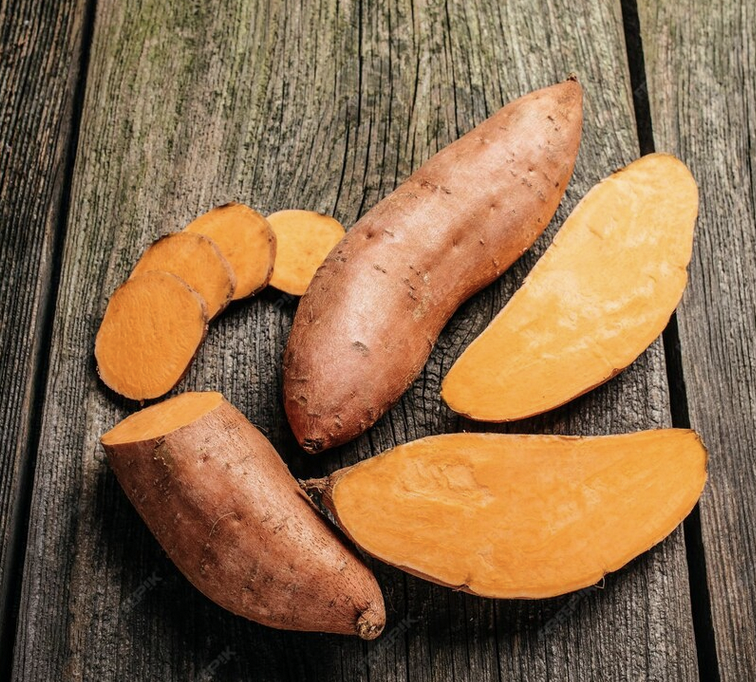
Garnet Sweet Potato
This is a red-skinned root with deep orange flesh that has great flavour. Garnet sweet potatoes are medium to large in size and are slender and cylindrical in shape, tapering at the ends. The flesh is orange-gold and is firm, dense, and moist. When cooked, Garnet sweet potatoes are starchy and moister than other varieties, and its flavor is sweet with a savory earthiness. This is a favourite among the home cooks and seasoned chefs for it's flavour.
100-110 days to maturity
-

Golden Sweet Potato
Sweet Golden has very sweet, slightly creamy flesh. Both the skin and the flesh are white on this variety. White sweet potatoes have a milder, slightly nutty flavor and a firmer, drier texture than their orange-fleshed counterparts, making them versatile for both sweet and savory dishes. Good keeper.
110-115 days to maturity
110-115 days to maturity
-

Purple Purple Sweet Potato Slips
Purple skin and flesh! Stunning dark purple coloration, standard tapered root shape and size. A uniform and concentrated root set, outperforming any other purple-fleshed varieties we have trialed. Performed well in our short growing season without any row cover. Stores well.
100 days to maturity
-

Korean Purple Sweet Potato
(Heirloom) Korean Sweet Potatoes have purple skin and white flesh, which turns creamy yellow when cooked. They have a lower water content which makes them perfect as a roasted or baked snack because they retain a dry but fluffy interior when cooked. They are sweeter than American sweet potatoes. Early maturing, vigorous vines.
100 days to maturity
-

Owaikara Red
Flesh is a pale yellow, with red skin. This variety does very well for us in our short eastern Ontario summers. Owaraika Red are firm textured making them ideal for roasting. They have a vigorous growth habit with long runners.
110 days to maturity
-

Ginseng Red Sweet Potato
(Heirloom) Ginseng Red are early maturing plants with 4-6' vines. They have pinkish-red skin with light orange flesh. The shape of the leaves is cut with a serrated ivy-type look.
105 days to maturity
-

Tainung 65
This red skin, yellow flesh variety is drier, firmer and milder than others. Very good yield for regions with cool, short seasons and is excellent for storage.
100 days to maturity
-

Superior
Orange fleshed with copper-coloured skin and the plant has ivy-like leaves. Yields well.
100 days to maturity
-

White Travis
These plants are early maturing, grown on 6-8' vines. The white skin contains a dryer white flesh. Longer, tapered roots. Has an excellent yield potential as it forms many sizeable roots.
100 days to maturity
Sweet Potato Planting and Care Tips:
Receiving your slips:
We cannot ship slips any sooner than the first week of June, for fear of frost damage in transit. We are located in Eastern Ontario, zone 4b, so our weather is unsettled in spring and can be quite cold.
Once your slips arrive, place them upright in a jar of water (change water daily. Remove any dead leaves from the water to prevent rotting!) or a container of moist, loose potting soil until you are ready to plant. Warmth is more important than light.
I recommend keeping them indoors in a draft-free sunny window, or under grow lights.
Have them sit overnight to re-acclimate (they are REALLY not fond of traveling)
When your slips arrive they may be a bit droopy from their travels – they are very dramatic little plants and may look half dead, but don’t worry! As long as the stem is firm and alive, they will be fine. They are tougher than they look and will perk up nicely with a little bit of care.
Slips arrive with small rootlets, ready to be planted directly into field. They are packed lined up so easy to grab when transplanting. We try to ship them with small roots, as we find they travel better - roots need consistent temps and moisture to survive, it can be challenging to maintain these conditions in shipping, so transporting them bare root is best.
Once they have recovered, and the weather is above 10 - 15 degrees Celsius, you can start to harden them off by getting them used to being outside. A little sun, a little shade, a little wind and back inside especially if they start to droop.
Be sure to bring them inside for overnight for the first couple of days.
Slips may be potted up in loose potting soil instead of kept in water, and transplanted outside once they have been hardened off, and the ground is warm and the weather is suitable.
Planting:
DO NOT PLANT SWEET POTATOES OUT UNTIL YOUR SOIL IS AT LEAST 15 DEGREES CELSIUS, 2 INCHES DOWN. People always rush to plant their slips out during the last weekend in May. This is far too soon, as the soil is still cool. We bring our industrial slips up in the second week of June, and they are planted out that week. If you plant while the soil is still cold, your slips may rot, or they will sulk and not establish quickly.
Sweet potato plants do not tolerate cold or shade well (see above!). Resist the urge to plant out your slips until the soil has warmed and nighttime lows are consistently above 10 - 15 degrees Celsius. Plant in full sun, and in warm ground. Shadows from trees and building can reach quite a distance.
If the sun outside is extreme, wait for a cloudy day to plant or provide some partial shade. ie. a cedar shingle stuck into the ground beside the slip.
Field spacing depends on your growing system. They need space to vine. In our 30 inch wide bed system, we plant two rows through geotextile, with drip irrigation, at 12” apart and 12” in row.
Bury stem as much as possible. They really appreciate regular water to establish, a rainy day or water wheel works really well, then irrigate.
Plants will die back before establishing (transplant shock), it is normal for any leaves to fall off. Plants will regrow from just a section of “live” green stem!
Cuttings may be potted up in larger pots as they get bigger, the same as tomatoes. Do not allow the plants to become root bound as it will deform the sweet potatoes if they are left in too small size of pots.
Raised garden beds are best used to help maintain warm ground. We hill up the soil to make a raised bed. Loosen the soil to a minimum depth of one foot. If you have compacted or heavy soil, consider mounding the loosened soil into raised beds. Amend the soil with compost or fertilizer such as bone meal, blood meal, or pelletized chicken manure. Cover the area with clear plastic or black geotextile to help warm the soil. This can be used year after year. Plant your slips 12 inches apart in row and 36-48 inches between rows. Cut holes in the plastic and bury the slip up to its top three or four leaves. Thoroughly water after transplanting and every 1-2 days for the first three weeks.
Longer growing season areas do not need the plastic, but it helps to heat the soil.
Once your sweet potato plants are established, they can be watered sparingly. If the summer is dry and hot, provide 1 inch/week. Let them dry out between waterings to avoid rot. Every couple of weeks, lift the vines off the soil to stop rooting so that all of the energy goes into the tubers at the base of the plant.
Individual plants may be grown in larger black containers, 5 gallon or more size approximately 24” high and 20” wide, with drainage, do well. These do even better if the pot is set halfway into the ground. This is an easier way to grow if only a few plants, as they may be dumped out of the pot after first frost, instead of digging them up.
Regular watering will help to prevent splits in the sweet potatoes as it will with a lot of fruits and vegetables.
Harvesting, Curing and Storing:
Sweet potatoes must be left in the ground as long as possible to ensure they have time to size up! They are a long season crop, so if you are worried about a light frost, you can use row cover to extend your season.
If the soil gets down to 10°C or first frost, whichever occurs first (unless you have been covering the sweet potatoes) they should be dug. (10°C and below will cold damage sweet potatoes)
If a Killing Frost occurs, the plants are dead, and the sweet potatoes should be dug up the next day as the cold damage can start to occur.
Sweet potatoes damage easily and must be handled gently.
Some sweet potatoes will be right under the plant, others may be found at the end of a root up to approximately 3’ away if looking for water.
You do not need to cure the sweet potatoes if you are not planning on storing them for a long time, but it does really improve the flavour. Some customers said that it would not be necessary as they plan to eat them before then ;) They will develop better flavour if cured and stored for a while.
To cure properly, sweet potatoes must be kept at 28 to 32 degrees Celsius and 85-90% humidity for the first 7-14 days. In the average home, this can be challenging. To get around this, try putting the sweet potatoes in paper bags inside plastic bags with a few holes punched in them (8-10 medium-sized sweets/bag). Then, place the bags in a small room or closet with a space heater or next to a wood stove. Leave a fan blowing on them to avoid rot. Once cured, sweet potatoes will keep for months in the dark at room temperature. To prevent them from drying out, they can be left in paper and plastic bags. Do not store them below 12 degrees Celsius. Sweet potatoes reach peak tastiness 8 weeks after curing, but with the right storage conditions, they’ll last well into the spring. Remember to keep a few small ones to grow your own slips from next year.
Store sweet potatoes at minimum of 15°C. They will keep in a cupboard at room temperature well. (Keep out of light to discourage sprouting towards Spring) The sweet potatoes will stay good until the next harvest or longer if cured properly.